Import Goods from China: Buy via Agent vs Ordering Yourself
Learn how to start importing products from China via 1688 for online sellers. Compare using an agent vs ordering directly, plus tips to avoid scams.
 PTCARGO teamUpdated 2026-11-08 · 4 min read

Contents
- Getting Started with Importing Products from China for New Online Sellers
- Comparing Agent Purchasing vs. Self-Ordering (Direct Shipping to China Warehouse)
- How to Verify 1688 Suppliers and Avoid Scams
- Should You Order Samples Before Placing Bulk Orders?
- Tracking Cargo Status at the China Warehouse
- Summary: Start Importing with Confidence via PTCARGO
- FAQ
Getting Started with Importing Products from China for New Online Sellers
Starting an online retail business today requires keeping product costs as low as possible as a key factor for success. Importing products from China, especially ordering through leading wholesale websites like 1688, has become the most popular channel for entrepreneurs to source items directly at factory prices. However, beginners might still worry about language barriers, purchasing processes, and shipping goods back to Thailand.
Before placing an order, it is essential to understand the import system and ordering options. Choosing the approach that best fits your skills and budget will significantly reduce the risks of getting mismatched products, lost packages, or communication issues with Chinese suppliers.
Comparing Agent Purchasing vs. Self-Ordering (Direct Shipping to China Warehouse)
When importing goods via 1688 or Taobao, buyers generally have 2 main options based on their convenience:
1. Buy-For-Me Import Service (Assisted Purchasing & Shipping): You choose the items you want and send the product links to the shipping company. Their team handles the ordering, communicates with Chinese sellers, processes payments, and manages freight from China to Thailand right to your doorstep.
2. Self-Ordering (Warehouse Forwarding Only): You register an account, pay the Chinese supplier directly on 1688, and have the supplier ship the items to the shipping company’s China warehouse. The shipping company then takes over to clear customs and deliver the goods to Thailand.
| Comparison Point | Buy-For-Me Service (Via Agent) | Self-Ordering (Warehouse Only) |
|---|---|---|
| Language Used | No Chinese required; support team assists in communication | Must communicate in Chinese or rely on translation tools |
| Payment Method | Pay in THB through the shipping company system | Requires an Alipay account or Chinese payment methods |
| Convenience | Highly convenient, ideal for beginners | Must handle all documents and order entries yourself |
| Risk of Scams | Lower, as experienced specialists coordinate for you | Higher risk; must handle disputes and tracking yourself |
How to Verify 1688 Suppliers and Avoid Scams
Since 1688 hosts a massive number of factories and wholesale suppliers, vetting trustworthy sellers is a step you cannot skip. To protect yourself from low-quality items or unfulfilled orders, check the following details:
- Check Verification Badges: Look for verified factory badges or gold-level seller icons, which offer a baseline guarantee that the factory actually exists.
- Store Operating History: Suppliers operating for several years generally offer higher reliability and production stability compared to newly opened stores.
- Review Ratings & Real Customer Photos: Read feedback from actual buyers, focusing on photos posted by previous customers to check if the real product matches the promotional images.
- Repeat Purchase Rate: A high repeat purchase percentage indicates that previous buyers are satisfied with the product quality and service.

Should You Order Samples Before Placing Bulk Orders?
For sellers planning to import large volumes, it is strongly recommended to always order product samples first. Although buying single units or small quantities may result in a higher unit price and shipping fee, inspecting actual materials, stitching, functionality, or exact sizing helps prevent costly losses from receiving subpar bulk shipments.
Once you verify that the sample meets your standards, you can confidently place bulk orders and optimize shipping costs. You can try to calculate estimated shipping fees before placing your final order.
Tracking Cargo Status at the China Warehouse
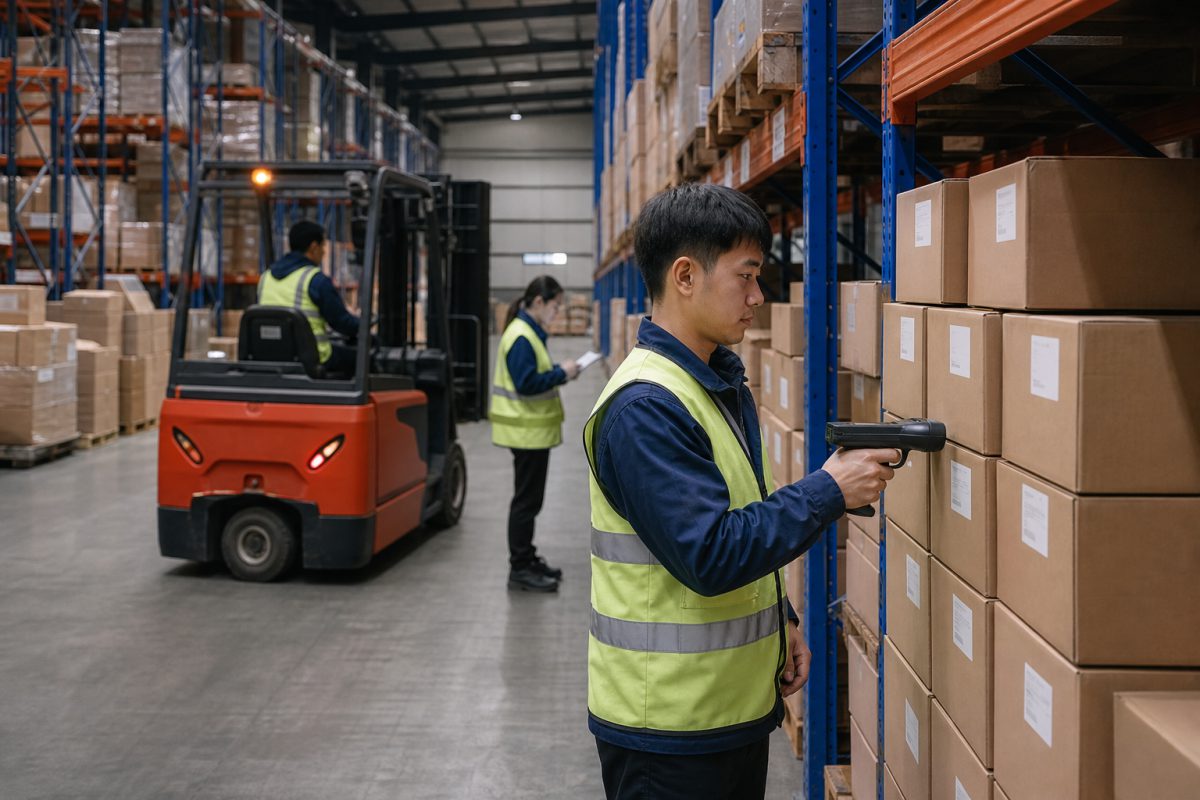
After the supplier dispatches your goods to the China warehouse, choosing a reliable shipping partner allows you to track package status around the clock. Real-time updates cover every stage—from warehouse arrival and truck or sea container loading to arrival in Thailand and final home delivery.
If you wish to learn more about import procedures or read helpful guides, visit our Import Knowledge Center to prepare your business for smooth operations.
Summary: Start Importing with Confidence via PTCARGO
Importing products from China is neither difficult nor overly complex for beginners when planned correctly. By selecting reliable suppliers and choosing an ordering method tailored to your needs, using an agent purchasing service will streamline your workload and effectively reduce business risks.
If you are ready to start or have questions about importing goods, you can register for a free account to use our tracking system or contact the PTCARGO team on LINE right away. We are happy to provide guidance and assist you with every step of your import process.
FAQ
Should beginners use a purchasing agent or order products directly?
For beginners, using an agent buy-for-me service is recommended. You will not need to manage Chinese communication, payment accounts, or supplier negotiations, which significantly reduces the risk of scams and errors.
How are shipping rates from China to Thailand calculated?
Shipping costs are calculated by actual weight (kg) or package volume (CBM/cubic meter), depending on the transport mode chosen (land or sea freight). You can provide product dimensions to our team for a free pre-shipment estimate.
What happens if received items are damaged or incorrect?
If you use our buy-for-me service, our logistics team will assist in negotiating with the Chinese seller to handle claims, replacements, or refunds according to the supplier's store policy.